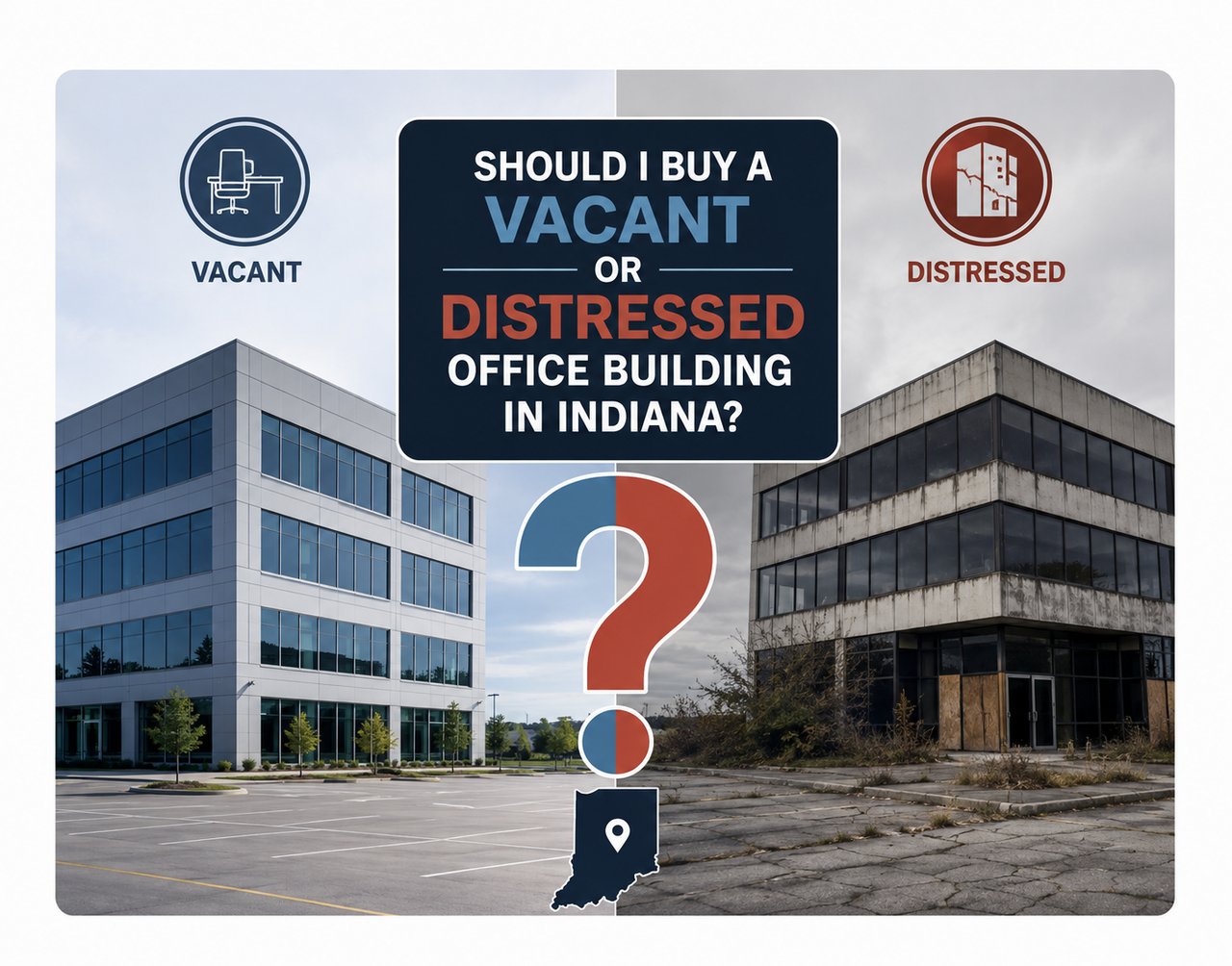
As office markets adjust, some buildings are being offered at prices well below what they once sold for — or what they'd cost to build. For owner-users, investors and developers, a distressed office building for sale in Indiana can be a real opportunity. It can also become an expensive mistake. Here's how to tell the difference.
Why office buildings become distressed
• Major tenants leaving
• Loans maturing in a higher-rate environment
• Deferred maintenance
• Outdated design and systems
• Weak locations or oversupplied submarkets
Who buys vacant office buildings
• Owner-users who can occupy much of the building
• Value-add investors planning renovations and lease-up
• Developers considering conversion or redevelopment
• Medical and specialty users needing specific layouts
Key questions before buying
• Why is the building vacant or distressed?
• What will it cost to renovate common areas and systems?
• What tenant improvements will new tenants need?
• How long will lease-up realistically take?
• What will carrying costs be during lease-up?
• Does the location attract tenants today?
• Is conversion legally and physically feasible?
Owner-users have an edge
An owner-user who occupies part of a vacant building eliminates much of the lease-up risk and can lease remaining space over time. Owner-users can often pay more than investors for the same building.
Conversion possibilities
Some office buildings can be converted to apartments, medical office, schools, flex space or other uses. Feasibility depends on floor plate depth, windows, plumbing, parking and zoning. Many buildings don't convert economically.
Financing distressed office
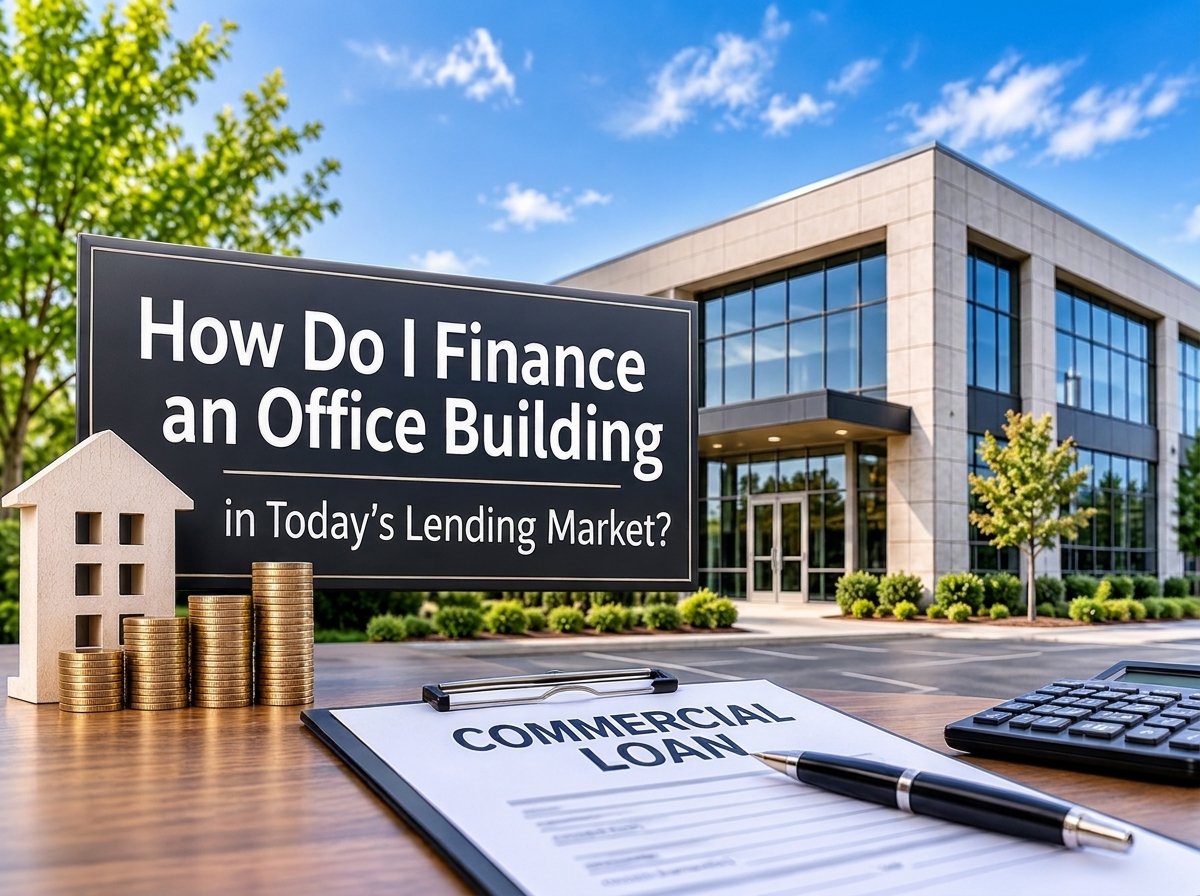
Lenders may require more equity and proof of a credible business plan. Seller financing, bridge loans or SBA financing for owner-users may help.
An example of a distressed opportunity
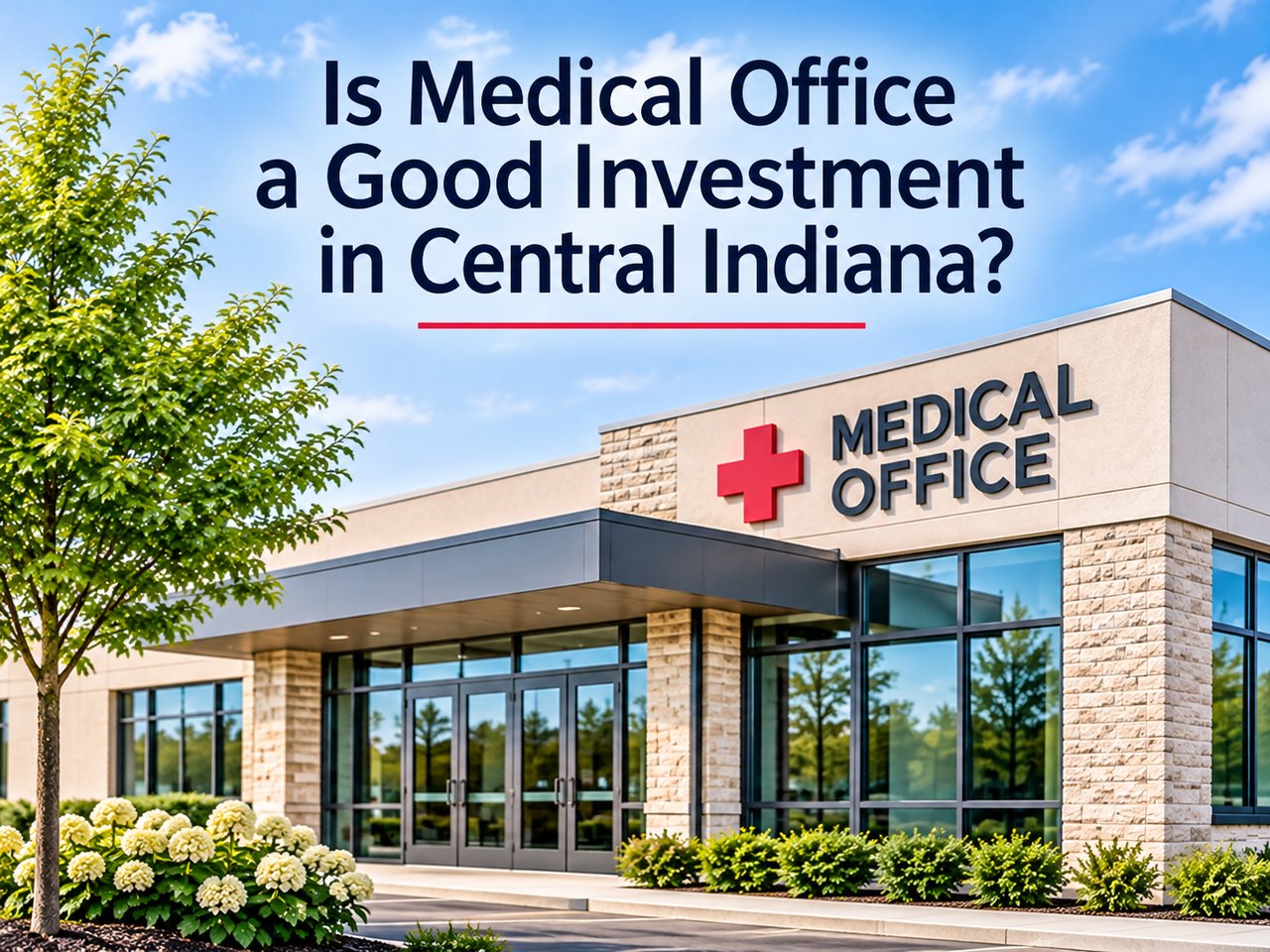
A growing healthcare organization needed about 15,000 square feet and found a vacant 22,000-square- foot office building in a Central Indiana suburb offered at a significant discount. The organization occupied the majority of the building, leased the rest to compatible medical tenants and owned its facility at a cost below comparable leased space.
Estimating carrying costs during lease-up
Vacant buildings still incur taxes, insurance, utilities, maintenance, security and debt service. Investors buying a distressed office building should budget these costs for a realistic lease-up period, often a year or more. Underestimating carrying costs is one of the most common reasons value-add office projects struggle.
Creating demand for a repositioned building
Buyers who successfully reposition vacant office buildings typically:
• Upgrade lobbies, restrooms and corridors
• Build several move-in-ready spec suites
• Improve parking, lighting and signage
• Add shared amenities like conference rooms or a tenant lounge
• Market aggressively to brokers and local businesses
These steps help a distressed office building for sale in Indiana compete with better-known buildings and attract tenants more quickly.
Frequently asked questions
Are vacant office buildings good investments? They can be at the right price with a credible plan.
Can office buildings be converted to apartments? Some can, but many aren't suited.
Who is the best buyer for a vacant office building? Often an owner-user.
Evaluate distressed office opportunities
I help Indiana buyers analyze vacant and distressed office buildings and develop realistic plans.
Annie Scott — Annie Scott Realty Group LLC / F.C. Tucker Company Cell: (317) 902-8622 ·