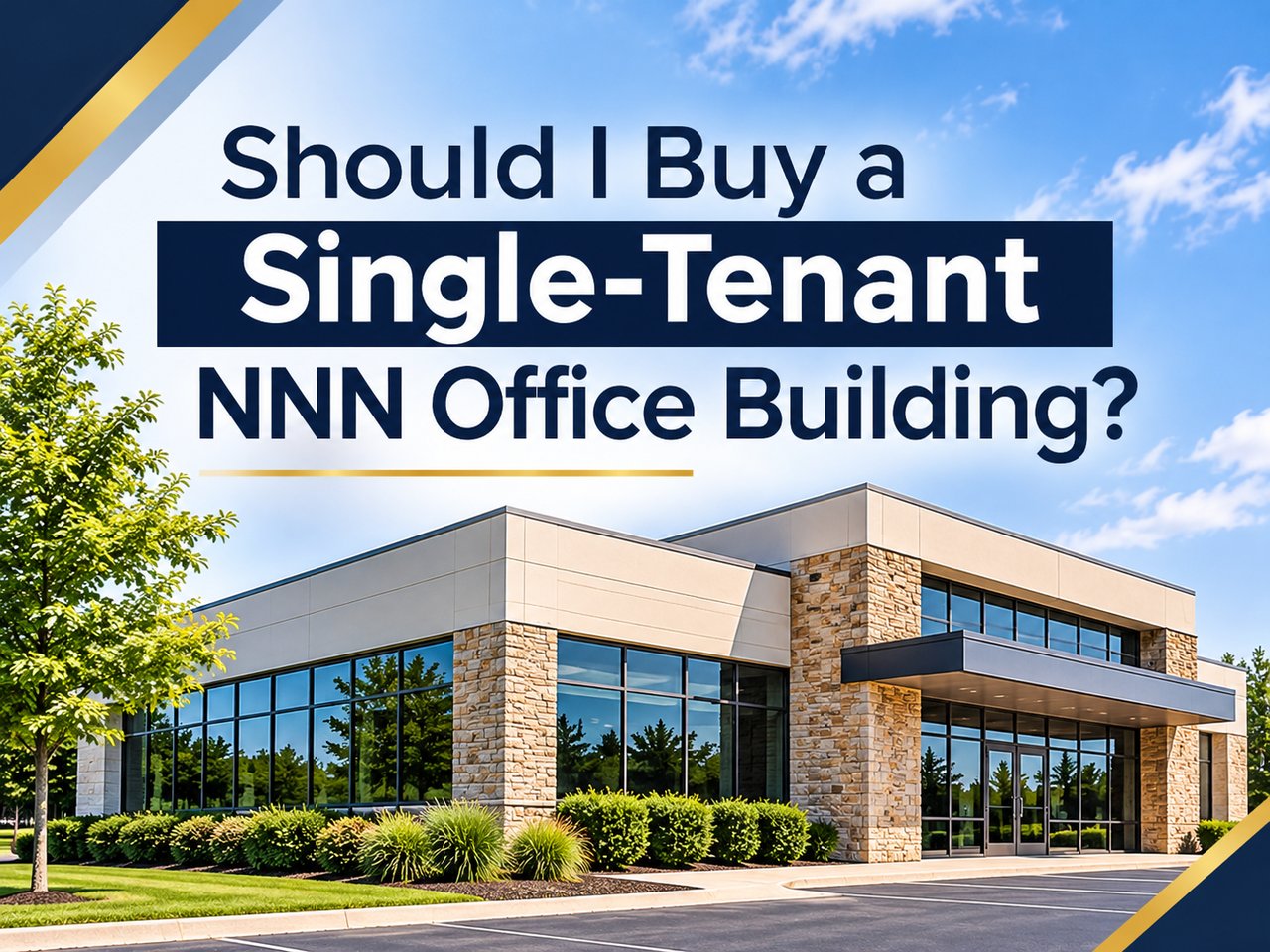
Single-tenant net-leased office buildings appeal to investors seeking passive income: one tenant, long lease, tenant pays most expenses. But a single-tenant NNN office building concentrates risk in one company. Here's how to evaluate these investments in Indiana.
How single-tenant NNN office works
The tenant leases the entire building and typically pays property taxes, insurance and maintenance. Depending on the lease, the landlord may still be responsible for roof, structure or parking lots.
Benefits
• Simple management
• Predictable income
• Long lease terms
• Tenant handles most operating costs
Risks
• Binary vacancy: if the tenant leaves, income drops to zero
• Re-leasing costs: single-tenant buildings may need major improvements for a new user
• Tenant credit: the investment is only as strong as the tenant
• Lease expiration timing: value often drops as the end of the lease nears
• Building suitability: could another tenant use the building, or could it be divided?
What to evaluate
• Tenant financial strength and industry outlook
• Remaining lease term and renewal options
• Rent compared with market
• Landlord responsibilities in the lease
• Location and building flexibility
• Potential for multi-tenant conversion
Above-market rent warning
Some single-tenant office buildings carry rents above market, often from build-to-suit deals. Investors should value the building on rent the tenant would pay at renewal or a new tenant would pay, not just today's rent.
An example of evaluating NNN office
An exchange buyer considered a single-tenant office building leased to a regional company with six years remaining. The tenant was strong, but the building's layout was highly customized. By modeling a potential conversion to multi-tenant use if the tenant left, the buyer set a price that accounted for re- leasing risk.
Planning for the end of the lease
The value of a single-tenant NNN office building often declines as the lease nears expiration, because buyers worry the tenant may leave. Smart owners start renewal discussions early — often three to five years before expiration — and consider extending the lease in exchange for improvements or modest rent adjustments. A fresh long-term lease can restore value and make the building easier to sell or refinance.
Multi-tenant fallback plans
Before buying, ask: if the tenant leaves, could this building be divided for several smaller tenants? Look at entrances, restroom locations, HVAC zoning, parking and floor layout. Buildings that can convert to multi-tenant use or attract owner-users provide a safety net. That flexibility is one of the most important factors when evaluating any single-tenant NNN office building.
Frequently asked questions
Is single-tenant NNN office passive? Mostly, but landlords still face lease expiration risk.
What happens if the tenant leaves? Income stops until re-leased; plan for that scenario.
Are long leases always better? Generally, but tenant credit and market rent matter.
Evaluate NNN office with Annie Scott
I help Indiana investors analyze single-tenant office buildings and the risks behind the lease.
Annie Scott — Annie Scott Realty Group LLC / F.C. Tucker Company Cell: (317) 902-8622 ·