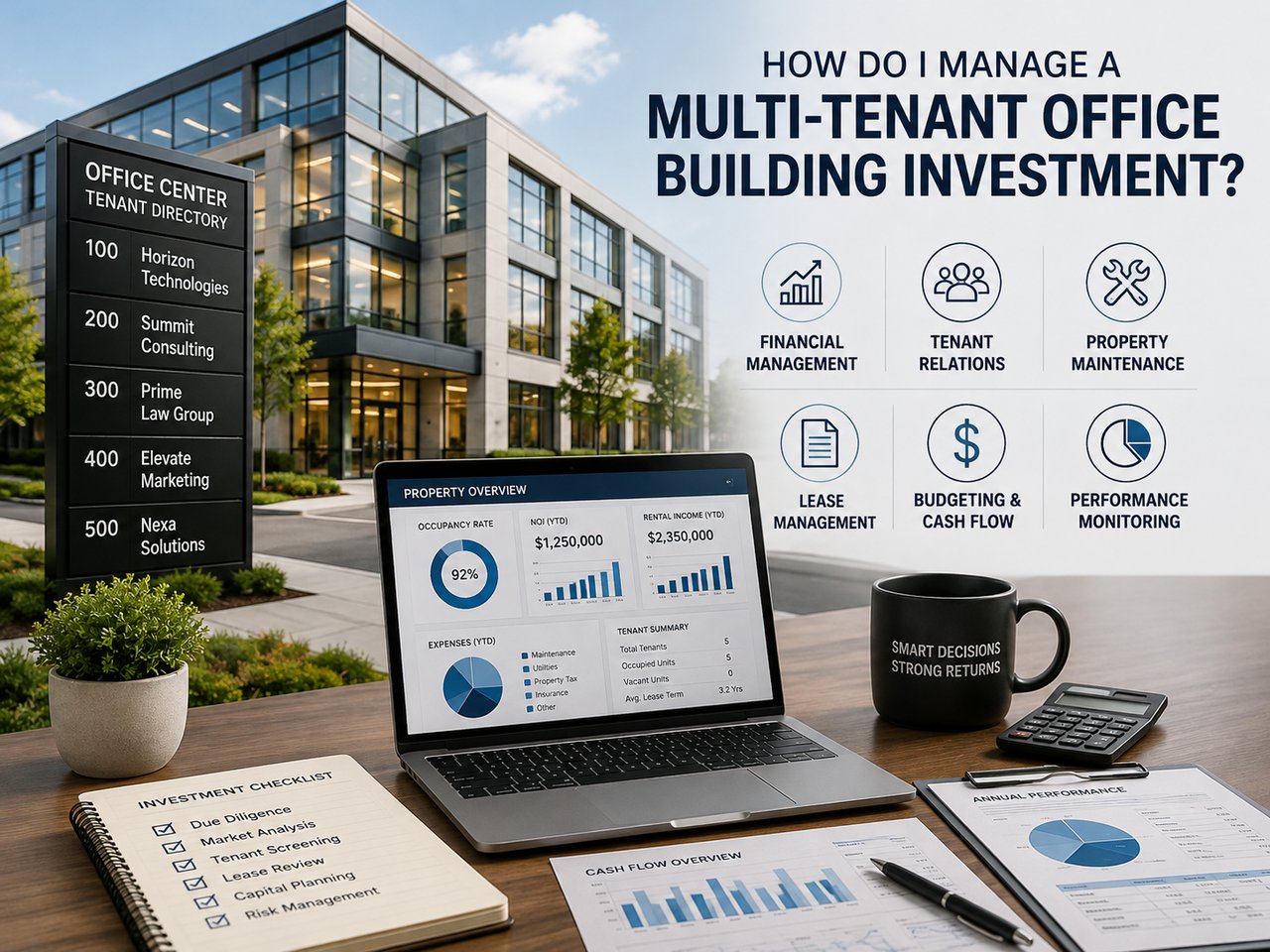
Multi-tenant office buildings spread risk across many tenants but demand active management. Leasing, maintenance, expense reconciliations and tenant relationships all influence performance. Here's how successful owners manage a multi-tenant office building investment in Central Indiana.
Core management responsibilities
• Collecting rent and billing expense pass-throughs
• Preparing annual operating expense reconciliations
• Managing janitorial, HVAC, elevator and security vendors
• Maintaining common areas, parking lots and landscaping
• Responding quickly to tenant requests
• Tracking lease dates and renewals
• Coordinating tenant improvements
Tenant experience drives retention
Office tenants renew when their space works and their landlord is responsive. Clean common areas, comfortable temperatures, working elevators, quick repairs and good communication matter. Every renewal saves free rent, improvements, commissions and downtime.
Leasing strategy
• Stagger lease expirations
• Build move-in-ready spec suites for small tenants
• Track market rents and concessions
• Maintain relationships with tenant brokers
• Offer expansion options to growing tenants
Capital planning
Budget for roofs, HVAC, elevators, parking lots and common area upgrades. Plan improvements that make the building competitive, such as updated lobbies, restrooms and amenity spaces.
Expense management
Review vendor contracts regularly, appeal property tax assessments when appropriate and pursue energy efficiency to reduce costs and improve competitiveness.
Self-manage or hire a professional?
Small building owners may self-manage, but office buildings' complexity often justifies a professional manager experienced with office properties, reconciliations and tenant relations.
An example of active management
The owner of a 40,000-square-foot office building in Indianapolis faced several upcoming expirations. By meeting with tenants early, refreshing restrooms and the lobby, and offering modest improvements for renewals, the owner retained most tenants and leased remaining vacancies through spec suites.
Tenant communication best practices
Strong multi-tenant office building management depends on communication:
• Introduce yourself or your manager to every tenant after acquiring a building
• Share maintenance schedules and construction plans in advance
• Provide a simple way to submit and track service requests
• Conduct periodic tenant satisfaction surveys
• Check in with tenants well before lease expirations
Tenants who feel informed and respected are more likely to renew and refer other businesses to the building.
Using data to manage performance
Track occupancy, rent per square foot, operating costs per square foot, service response times, renewal rates and leasing velocity. Comparing these metrics over time and against competing buildings reveals where to invest and what to improve. Data-driven management helps owners make better decisions about capital projects, pricing and leasing strategy.
Frequently asked questions
What makes office tenants renew? Responsive management, a well-maintained building and fair renewal terms.
What are spec suites? Move-in-ready suites built before a tenant is signed.
Should I hire an office property manager? Often, for multi-tenant buildings.
Improve your office building's performance
I help Central Indiana office owners plan leasing, renewals and capital investments.
Annie Scott — Annie Scott Realty Group LLC / F.C. Tucker Company Cell: (317) 902-8622 ·