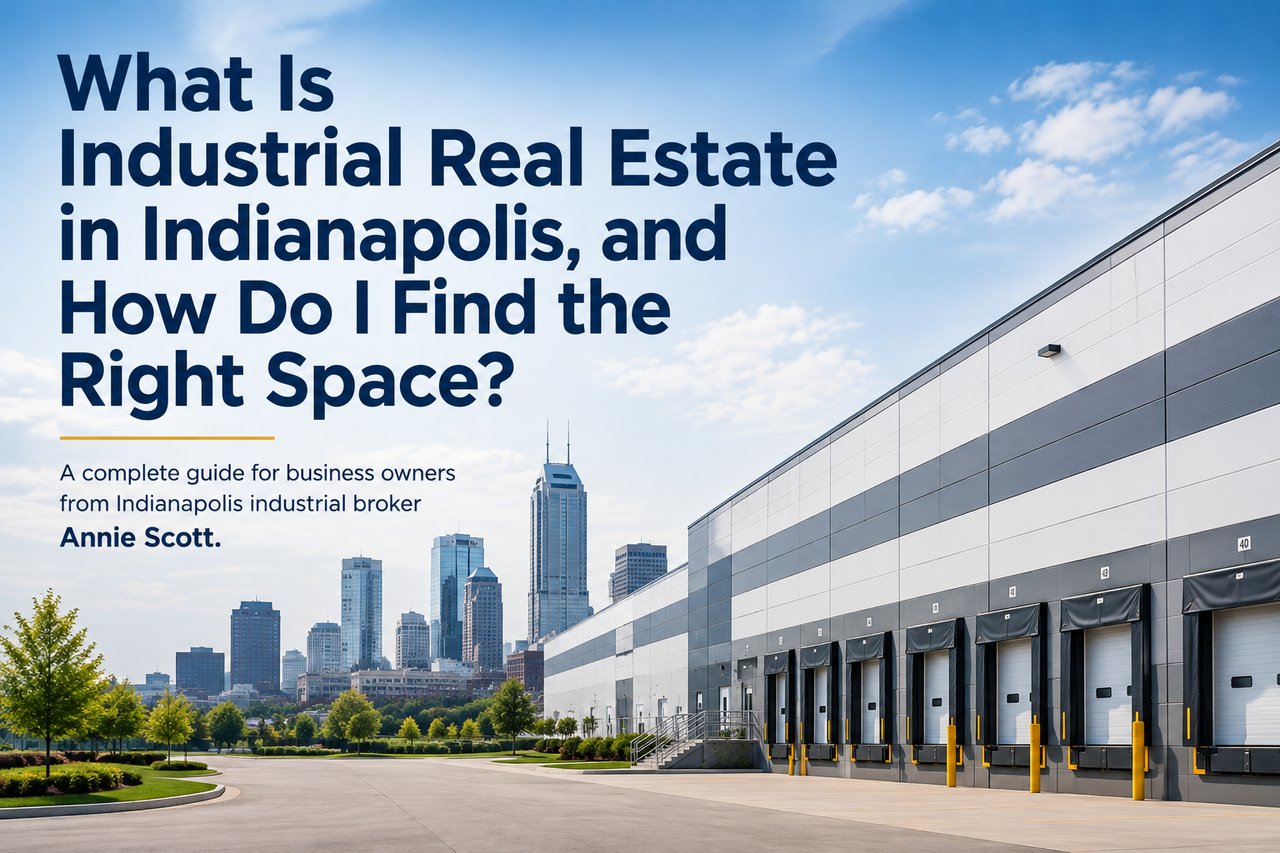
Industrial real estate in Indianapolis is the backbone of the Central Indiana economy. If your business makes, stores, ships, repairs or installs anything, it almost certainly operates out of industrial space. Yet most business owners only shop for industrial real estate once every five or ten years, which means they're often negotiating against landlords and sellers who do it every day. This guide explains what industrial real estate in Indianapolis is, how it's priced, and how to find the right building for your business.
What counts as industrial real estate in Indianapolis?
Industrial real estate is property built for work rather than for customers or desks. In Indianapolis and
the surrounding communities, it includes:
• Warehouses and distribution centers that store and ship products
• Manufacturing plants where goods are produced or assembled
• Flex buildings that combine office or showroom space with a shop or warehouse
• Small-bay and contractor buildings divided into units for local businesses
• Truck terminals and cross-docks that move freight between trucks
• Industrial outdoor storage (IOS) — fenced yards for trucks, trailers and equipment
What separates industrial real estate from office or retail is function. An office is judged by finishes and views. An industrial building is judged by how well it helps you work: clear height, loading doors, truck access, power, floor strength and yard space. Why Indianapolis is one of the country's top industrial real estate markets Indiana's motto, "The Crossroads of America," describes our industrial market perfectly. I-65, I-69, I-70 and I-74 all meet at the I-465 loop, and Indianapolis International Airport hosts FedEx's second-largest hub in the world. A truck leaving a warehouse in Plainfield or Greenwood can reach a large majority of the U.S. population within a day's drive. That geography is why the Indianapolis industrial real estate market includes massive distribution buildings in Plainfield, Whitestown, Lebanon, Greenwood and Mt. Comfort — plus thousands of smaller shops, flex buildings and manufacturing plants across Marion County and the suburbs. North of the city, Carmel, Fishers, Westfield and Noblesville offer flex and light-industrial space for growing companies that want to stay close to their workforce. How industrial space in Indianapolis is priced Most industrial space in Indianapolis is leased on a triple-net (NNN) basis. You pay base rent — quoted per square foot per year — plus your share of property taxes, insurance and common area maintenance. To compare two buildings fairly, always add base rent and NNN charges together to find your total occupancy cost. Rents vary widely by building type and location. A modern bulk warehouse in Plainfield, a 3,000-square- foot contractor bay in Carmel and an older shop on the east side of Indianapolis can carry very different price tags. That's why a headline "average rent" number rarely tells you what you'll actually pay.
Five questions to answer before you search for industrial space
Before you tour a single building, answer these:
1. How much space do you really need? Count pallets, equipment, work areas and employees, and plan for three to five years of growth.
2. How high do you need to stack? Clear height can matter more than square footage.
3. How do trucks and vans load? Dock-high doors, drive-in doors or both?
4. How much power do you need? Manufacturers and automated operations should confirm amps and voltage early.
5. Where do your employees and customers live? A building in Fishers, Greenwood or Avon serves very different commutes.
Answering these questions narrows your search dramatically and strengthens your negotiating position, because landlords take prepared tenants seriously.
Leasing vs. buying industrial real estate in Indianapolis
Many growing companies eventually ask whether they should buy their own building. Owning builds equity and gives you control; leasing preserves cash and flexibility. Programs such as SBA 504 loans can make ownership more accessible for owner-users. The right answer depends on how stable your business is and how long you plan to stay in one location.
How an industrial real estate broker in Indianapolis helps
An industrial specialist knows which buildings are about to come available, which landlords will negotiate, what comparable deals actually leased for, and which specs matter for your operation. In most lease transactions the landlord pays the commission, so tenants typically receive professional representation at no direct cost. Good representation often saves far more than base rent alone: free rent, improvement allowances, expense caps and renewal options all have real dollar value.
Frequently asked questions about industrial real estate in Indianapolis
What is the most common lease type for industrial space in Indianapolis?
Triple-net (NNN), where the tenant pays base rent plus taxes, insurance and maintenance.
How far in advance should I start looking for industrial space?
For most businesses, 9 to 12 months before you need to move. Larger or specialized users should start 18 months or more ahead.
Is there industrial space in Carmel and Fishers?
Yes, mostly flex, small-bay and light-industrial buildings. Supply is limited, so starting early matters.
Do I pay a broker to help me lease industrial space?
In most Indianapolis industrial leases, the landlordn pays the commission.
Work with an Indianapolis industrial real estate expert
Whether you need your first 3,000-square-foot shop or a 200,000-square-foot distribution center, I help central Indiana businesses find, lease and buy industrial real estate with confidence. Let's talk about what your operation needs.
Annie Scott — Annie Scott Realty Group LLC / F.C. Tucker Company Cell: (317) 902-8622 ·