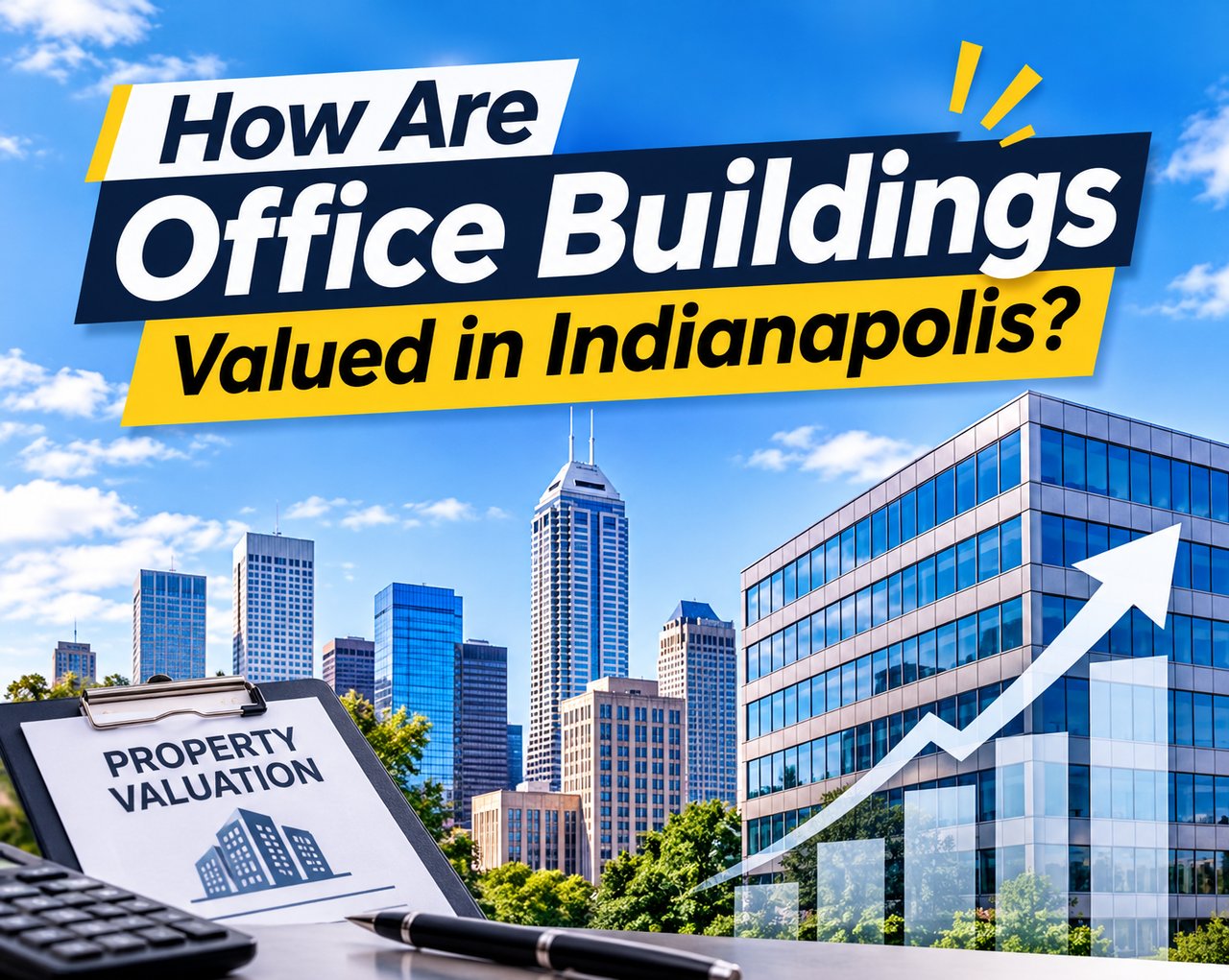
Whether you're buying, selling, refinancing or settling an estate, you need to understand office building valuation. In Indianapolis and Central Indiana, office values depend on income, comparable sales, building quality and the cost to lease and maintain space. Here's how professionals value office buildings.
The income approach
For leased office buildings, value is driven by net operating income (NOI). The simplest method divides NOI by a market cap rate. More detailed analysis projects cash flow over a holding period, including rent growth, lease expirations, tenant improvements, leasing commissions and capital expenses, then discounts it to today.
The sales comparison approach
This method compares the building with similar office properties that recently sold, adjusting for size, age, quality, location, occupancy and condition. It's especially useful for small office buildings and condos bought by owner-users.
The cost approach
This estimates the cost to build a similar building today, minus depreciation, plus land value. It's most relevant for newer or specialized properties such as medical office.
What makes office buildings unique to value
• Lease rollover: expiring leases may require significant tenant improvements and commissions to renew or replace
• Tenant credit: strong tenants reduce risk
• Building systems: elevators, HVAC and roofs can require major capital
• Market vacancy: affects how quickly vacant space leases
• Owner-user demand: small buildings may sell to businesses willing to pay more than investors Features that increase value
• Strong location and visibility
• High occupancy with long leases
• Updated common areas and systems
• Ample parking
• Flexible floor plates that suit multiple tenant sizes
• Medical or specialized improvements in demand
Features that reduce value
• Near-term lease expirations without renewals
• Deferred maintenance
• Outdated systems and finishes
• High vacancy in the submarket
• Limited parking
An example of valuation
A 30,000-square-foot multi-tenant office building in a suburban park had strong occupancy, but several leases expired within two years. Our valuation projected the cost of renewing tenants — refurbishment allowances, free rent and commissions — and adjusted value accordingly. That analysis helped the buyer and seller agree on price.
Why leasing costs matter so much in office valuation
In office buildings, the cost to keep tenants or replace them can be significant. Tenant improvement allowances, free rent and leasing commissions add up, especially for larger suites. A building with several expirations in the next few years may need substantial capital just to maintain occupancy. Buyers and appraisers account for these costs, which is why two buildings with the same NOI can have very different values.
Getting a valuation for different purposes
The purpose of a valuation affects the approach. A broker opinion of value helps owners decide whether to sell and at what price. A formal appraisal is required for financing, estate planning or legal matters. Owner-users may care most about comparable sales, while investors focus on income. Clarifying your goal helps ensure the office building valuation in Indianapolis answers the question you're actually asking.
Frequently asked questions
How is an office building valued? Primarily on income, supported by comparable sales and cost analysis.
Do owner-users pay more for office buildings? Often, for smaller buildings they plan to occupy.
What is lease rollover risk? The cost and uncertainty when leases expire.
Understand office values with Annie Scott
I help Central Indiana buyers and owners understand what office buildings are really worth.
Annie Scott — Annie Scott Realty Group LLC / F.C. Tucker Company Cell: (317) 902-8622 ·