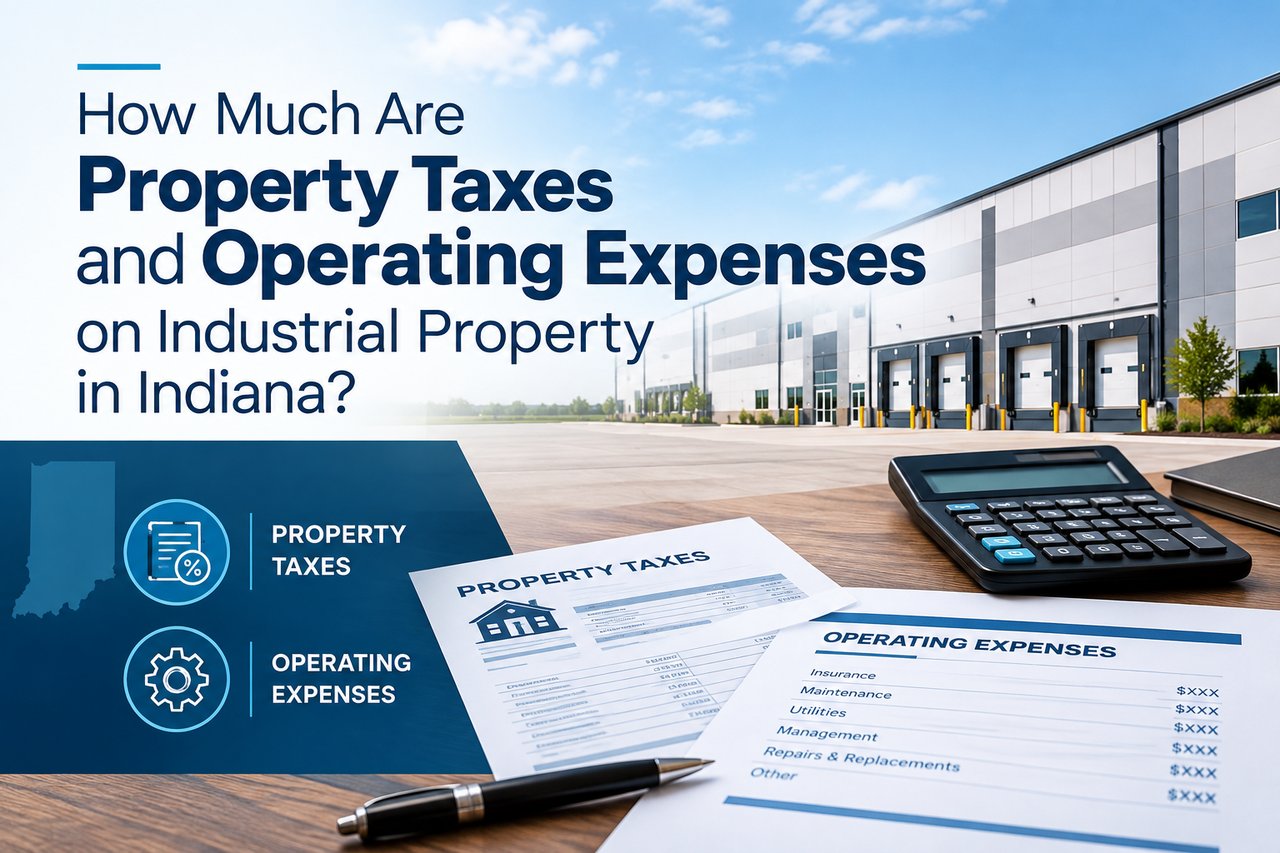
When comparing industrial spaces in Indianapolis, Carmel or anywhere in Indiana, base rent is only part of the story. Property taxes, insurance and common area maintenance can add meaningfully to your cost per square foot. Understanding industrial property taxes in Indiana and the operating expenses behind them helps tenants budget accurately and helps owners price buildings competitively.
How industrial property taxes work in Indiana
Indiana's constitution caps property taxes on commercial and industrial property at 3% of gross assessed value. That cap gives owners and tenants predictability. But actual tax bills vary by county, township and taxing district. A building in Marion County may carry a different effective tax rate than one in Hamilton, Hendricks, Boone, Johnson or Hancock County, depending on local levies and assessments.
Tax abatements and what happens when they expire
Many Indiana communities offer property tax abatements on new construction or equipment investment. Abatements usually phase in taxes over several years. If you lease or buy an abated building, know the schedule. When abatements step down, taxes — and the NNN charges tenants pay — rise. I've seen tenants surprised by significant NNN increases mid-lease simply because no one explained the abatement schedule.
Business personal property taxes
Indiana also taxes business personal property such as equipment, though small businesses below a reporting threshold may be exempt. Manufacturers with substantial equipment should discuss this with their accountant, because it affects total occupancy cost.
Insurance costs
Property insurance premiums have risen across the country. Building age, roof condition, construction type, sprinkler systems, tenant use and claims history all affect premiums. In NNN leases, tenants pay their share.
Common area maintenance
CAM covers snow removal, landscaping, paving repairs, exterior lighting, management fees and minor repairs. Multi-tenant buildings typically carry higher CAM per square foot than single-tenant buildings because of shared areas and more frequent services.
Utilities
Tenants usually pay utilities directly. For manufacturers and cold storage users, electricity and natural gas can be among the largest operating costs. Ask for past utility bills before signing.
An example: comparing two buildings' operating expenses
A tenant compared two 25,000-square-foot buildings in Central Indiana. Building A, in Hamilton County, had a lower base rent but higher NNN charges because of a large shared parking lot and an expiring abatement. Building B, in Johnson County, asked slightly higher rent but carried lower taxes and CAM. Over a five-year lease, Building B, s total cost was lower. Without reviewing operating expenses and abatement schedules, the tenant would have chosen the more expensive option.
How to protect yourself
• Request two to three years of historical operating expenses
• Confirm abatement schedules and projected tax increases
• Negotiate caps on controllable expenses
• Exclude capital replacements from CAM, or amortize them
• Ask whether the landlord appeals assessments
• Review reconciliations each year
What owners should know
Owners who manage expenses efficiently, appeal unfair assessments and communicate clearly with tenants have an advantage. Lower operating costs make buildings more competitive and support higher net rents.
Reading a CAM reconciliation: what Indiana tenants should check
Each year your landlord should send a reconciliation comparing estimated and actual operating expenses. Review it carefully:
• Does your pro-rata share match the square footage in your lease?
• Are capital replacements (a new roof or full parking lot rebuild) included when the lease excludes them?
• Are management fees within the lease's limits?
• Did property taxes rise because of an abatement step-down or reassessment?
• Are any expenses unrelated to your building or park?
If something looks wrong, ask for backup invoices before paying. Most landlords correct honest mistakes quickly, and tenants with audit rights can dig deeper. Understanding industrial property taxes in Indiana and the rest of your operating expenses is one of the easiest ways to protect your bottom line.
Frequently asked questions
What is Indiana's property tax cap for industrial property? 3% of gross assessed value for commercial and industrial property.
Do tenants pay property taxes in Indiana industrial leases? In NNN leases, yes — their proportionate share.
Why did my NNN charges jump? Common causes include abatement phase-outs, reassessments, insurance increases or heavy snow years.
Compare true occupancy costs with Annie Scott
I prepare side-by-side occupancy cost analyses for Indiana tenants and investors, including taxes, abatements, insurance and CAM.
Annie Scott — Annie Scott Realty Group LLC / F.C. Tucker Company Cell: (317) 902-8622 ·